
Making Kites
Making kites gives children a satisfying mix of design, hands-on building, and outdoor testing. It works well as an intellectual activity because small changes in structure affect the final result.
How To Run It
- Show a finished sample kite so the children can picture what they are making.
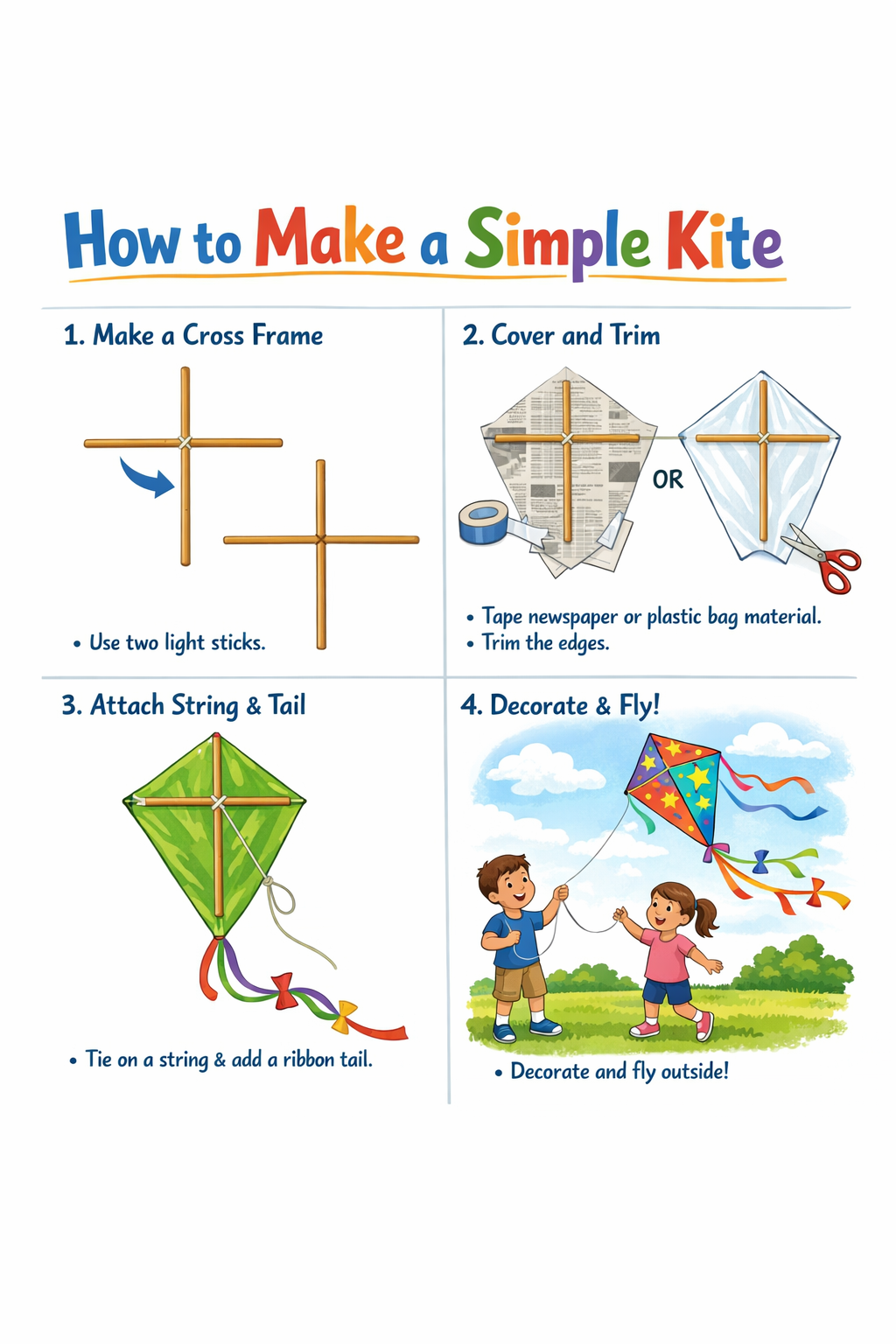
- Make a simple frame by crossing one longer stick with one shorter stick, placing the shorter stick across the upper third of the longer one.
- Tape the sticks tightly where they cross so the frame does not slide or twist.
- Lay the frame on newspaper or a cut-open plastic grocery bag, trace a diamond shape around it, and leave about an inch of extra material around the outside.
- Cut out the shape, fold the extra edge over the sticks, and tape it down to hold the kite body in place.
- Tie or tape string at the center of the cross point and make a tail from ribbon, yarn, fabric strips, or plastic strips.
- Let the children decorate the kite, then test it outside and adjust the tail if it spins too much.
What To Use
- Sticks: Bamboo skewers, thin wooden dowels, craft sticks taped together, or lightweight garden stakes all work well.
- Where to find sticks: Dollar stores, Walmart, craft stores, hardware stores, and grocery stores often carry skewers or dowels. Leaders may also already have bamboo skewers in the kitchen.
- String: Kite string is great, but cotton string, kitchen twine, yarn, or light craft string can also work for small homemade kites.
- Where to find string: Dollar stores, Walmart, craft stores, hardware stores, and kitchen drawers are all easy places to look.
- Kite body: Newspaper is easy to decorate, while plastic grocery bags are lighter and often fly better in damp grass or light wind.
Tape That Works Best
- Best overall: Clear packing tape holds the frame and kite body together very well and does not tear easily in wind.
- Good easy option: Regular clear tape works if the kites are small and the weather is mild.
- Best for younger kids: Painter's tape is easier to tear by hand, but it does not hold as strongly outdoors.
- What to avoid: Glue sticks and school glue usually do not hold well on plastic bags, and masking tape can peel off too easily outside.
How To Cut Grocery Bags
- Flatten the grocery bag on a table.
- Cut off the handles and the sealed bottom strip.
- Cut straight down one side seam so the bag opens into one flat sheet.
- Smooth it out and place your kite frame or paper pattern on top.
- Trace around the pattern, leaving about one inch around the edges so you have room to fold and tape it over the frame.
Use A Simple Pattern
Using one reusable pattern is helpful because every kite body will be cut to the same shape and size. If leaders pre-cut the sticks, they can make the pattern to match those stick lengths so the newspaper or plastic bag fits the frame more easily and the activity stays simple for beginners.
Helpful Tips
- Pre-cut some pieces if your group is younger.
- Use longer tails if the kite spins too much.
- Choose a day with light to moderate wind.
Step Illustration
This visual works well for homemade kites using either newspaper or a plastic grocery bag as the kite body.
Printable Kite Guide
Print this guide for leaders or table helpers. It includes both material options and a simple step list.
Newspaper Kite
Body: One full sheet of newspaper.
Frame: Two bamboo skewers, thin dowels, or lightweight sticks taped into a cross.
String: Kite string, cotton string, kitchen twine, or light yarn.
Tape: Clear packing tape works best. Regular clear tape also works for small kites.
Finish: Tape on string and add a ribbon or fabric tail.
Plastic Bag Kite
Body: One cut-open plastic grocery bag or thin trash bag section.
Frame: Two bamboo skewers, thin dowels, or lightweight sticks taped into a cross.
String: Kite string, cotton string, kitchen twine, or light yarn.
Tape: Clear packing tape holds better on plastic than school glue or masking tape.
Finish: Tape on string and add a longer tail for stability.
Reusable Pattern
Size: One stick about 20 inches long and one cross stick about 14 inches long.
Placement: Put the cross stick about 6 inches from the top of the long stick.
Use: Trace one diamond pattern on cardboard or cardstock and reuse it for every kite body.
How To Cut A Grocery Bag
Step 1: Cut off the handles and the sealed bottom.
Step 2: Cut down one side seam so the bag opens flat.
Step 3: Trace the kite pattern on the flat plastic and leave extra edge space for folding and taping.